Pachira is an Italian company that supports TV and advertising productions in finding and selecting locations. They work with broadcasters and top brands, making the path from scouting to selection faster and clearer.
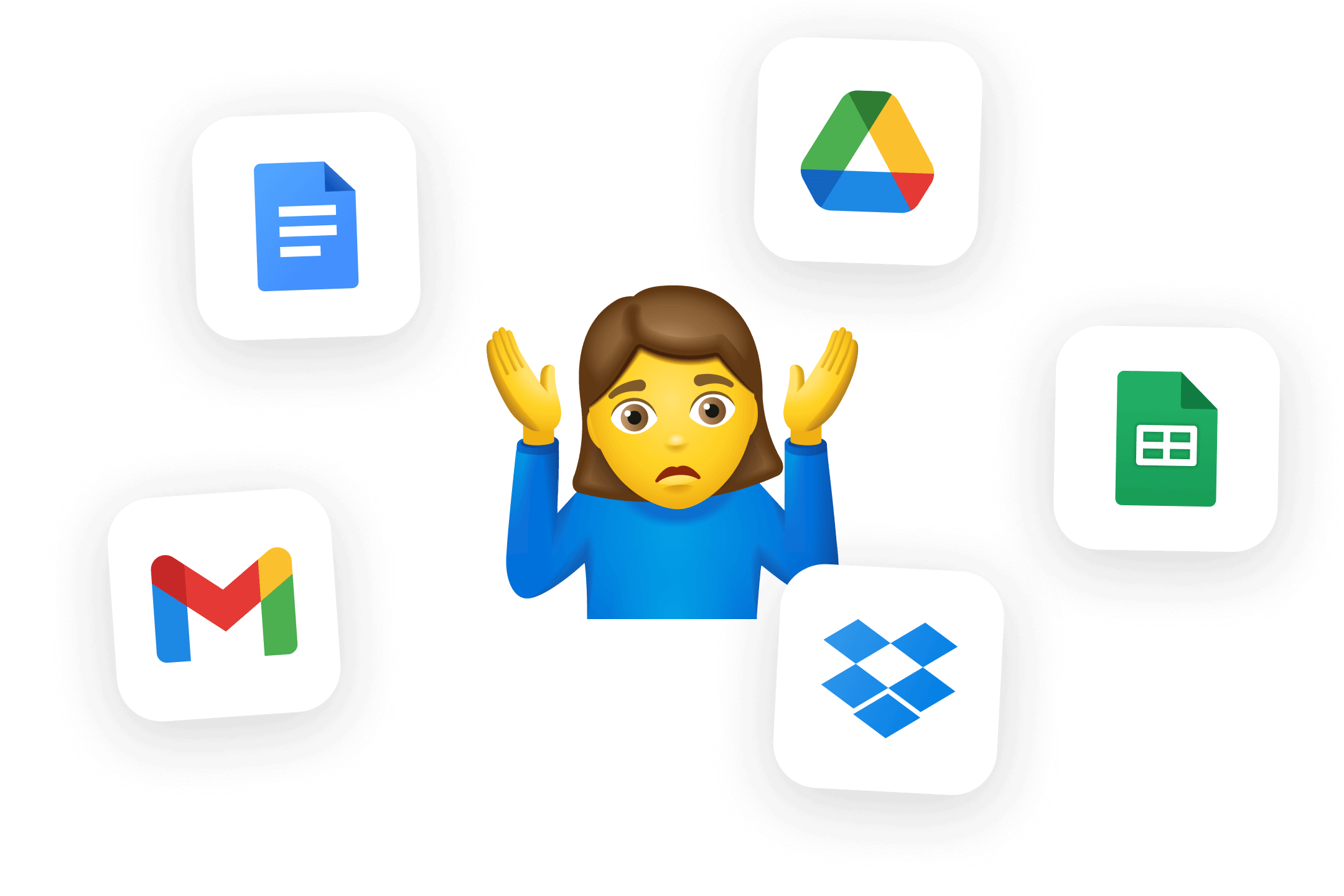
The Pachira team has always been focused on improving how they work, using digital tools to speed up the journey to the right location. As the location archive grew and requests became more complex, existing tools were no longer enough: shared files and spreadsheets slowed down search and fragmented work across too many steps, making proposal creation more cumbersome too.
- Strategy
- Research
- UX/UI Design
- Design System
- Development
Pachira asked us to build an internal software that would make the entire workflow faster and more controllable through digital and artificial intelligence: organizing the location archive, searching and filtering quickly, building shortlists and preparing proposals ready to share with the client.
A tailor-made solution, conceived as a digital product to evolve over time in an agile way, to manage locations in a granular way and drastically reduce the time from scouting to proposal.
Starting on the right foot
The project started with a Co-design Workshop, our process for kickstarting the development of new digital products. In this phase we worked alongside the Pachira team to fully understand their business, operational processes and the challenges around scouting and location management.
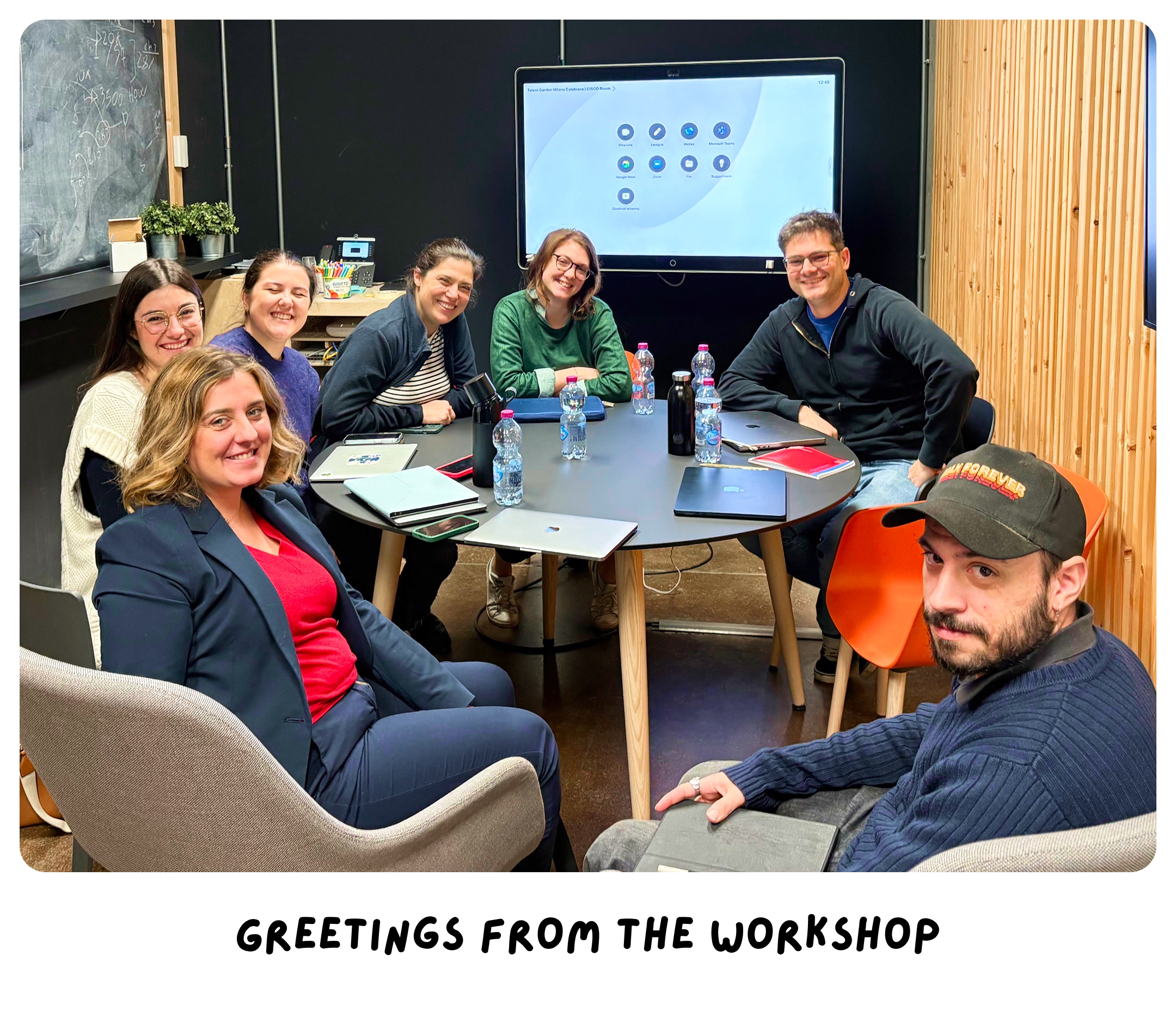
The goal was to build a long-term vision. Together we defined a multi-year roadmap, with progressive releases designed to grow the software sustainably.
This approach allowed us to turn complex needs into a coherent system, designed to evolve over time without losing simplicity and control.
Design and technology
For product development we set up a dedicated Moze team, made up of designers and developers working in an integrated way. The result is a web application built with React and Node.js, designed to be solid, scalable and easy to evolve over time, always keeping the user experience at the centre.
Location management
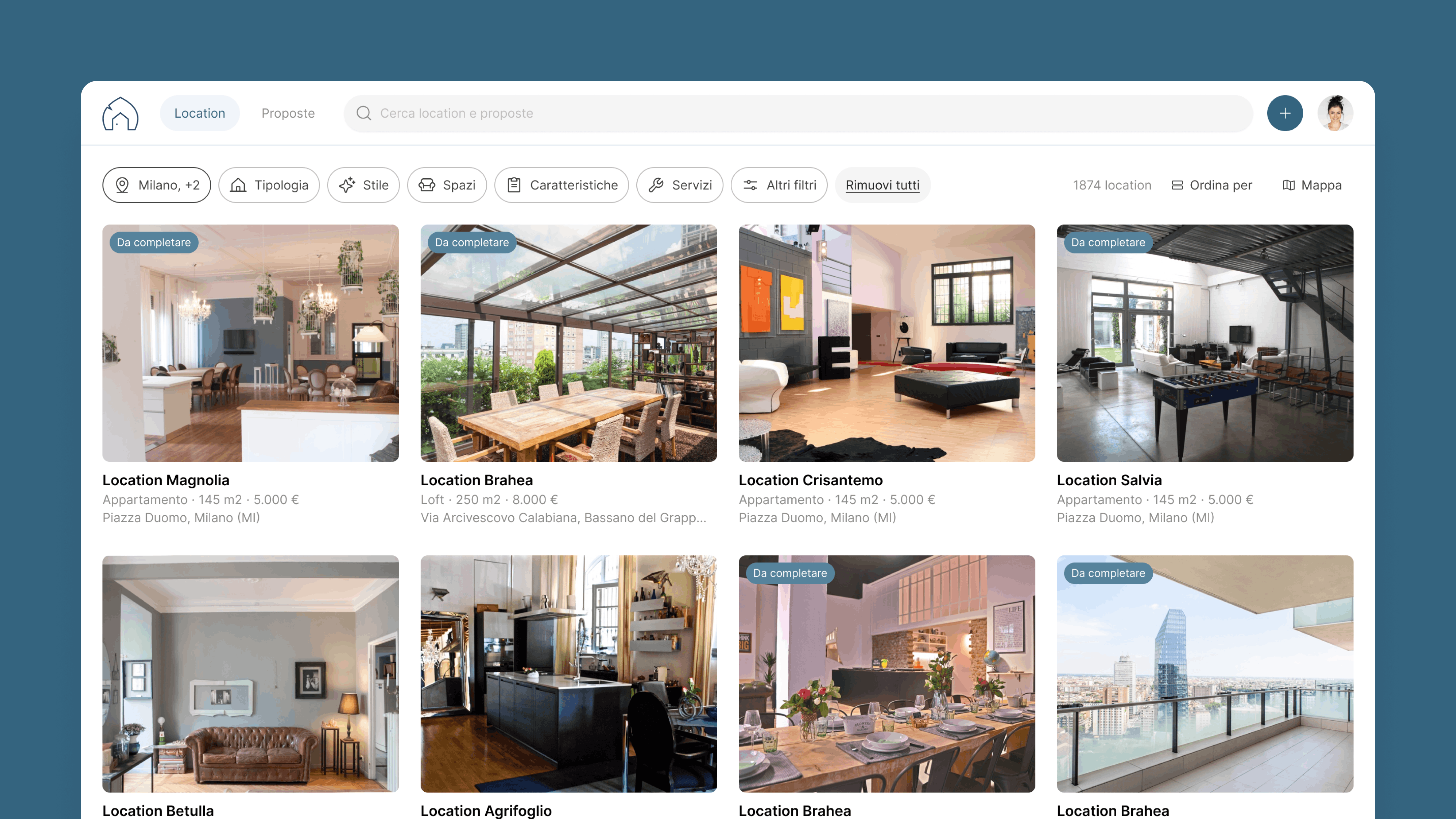
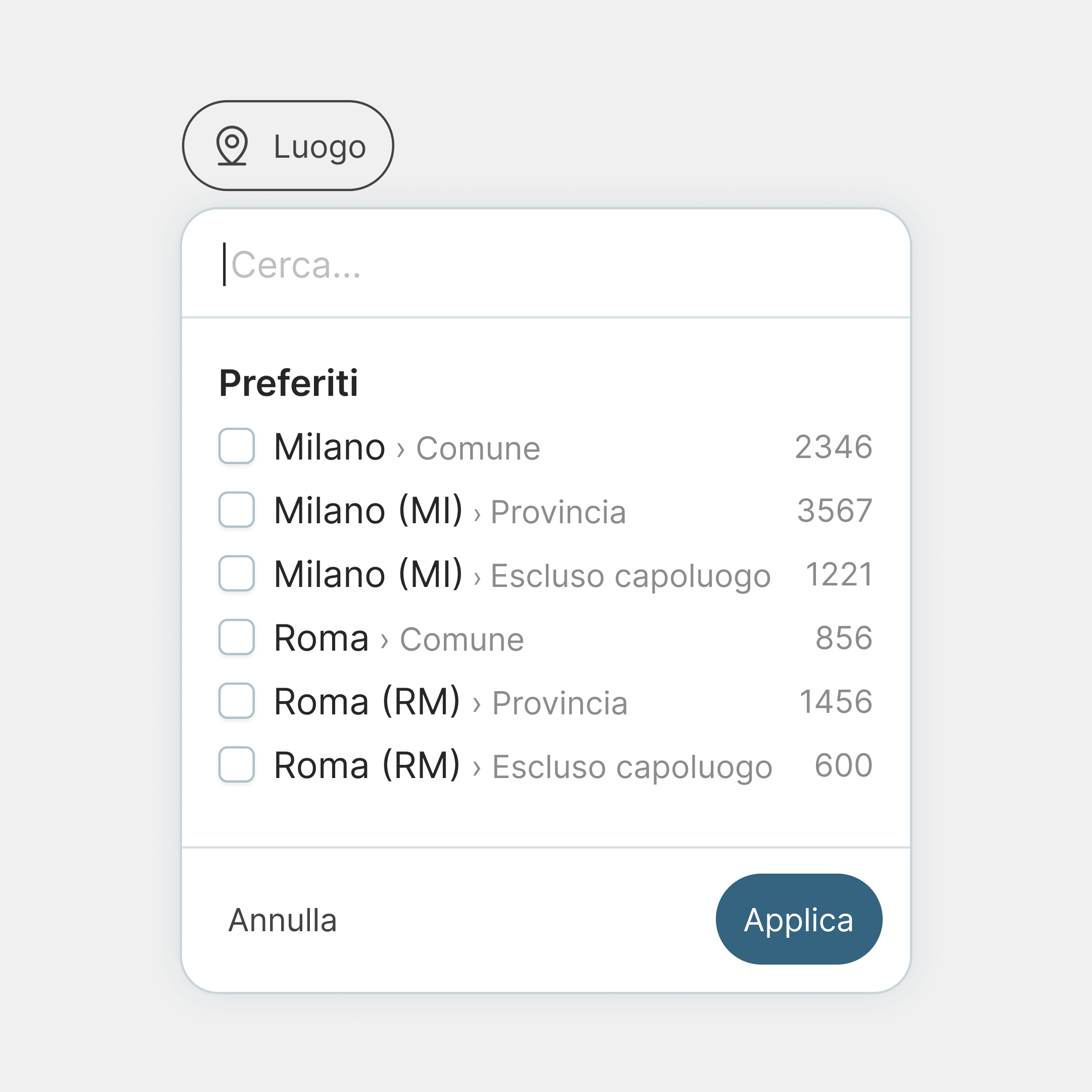
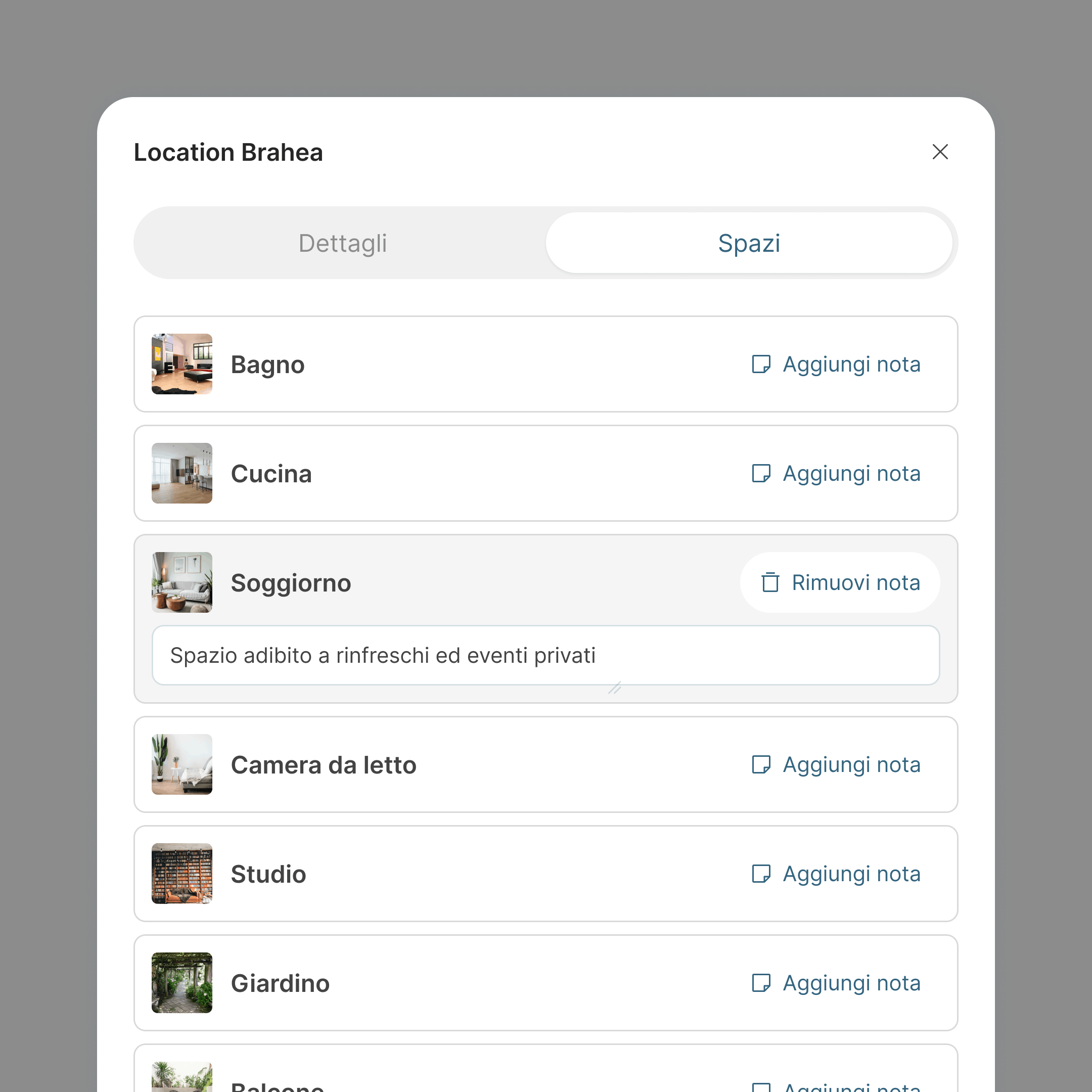
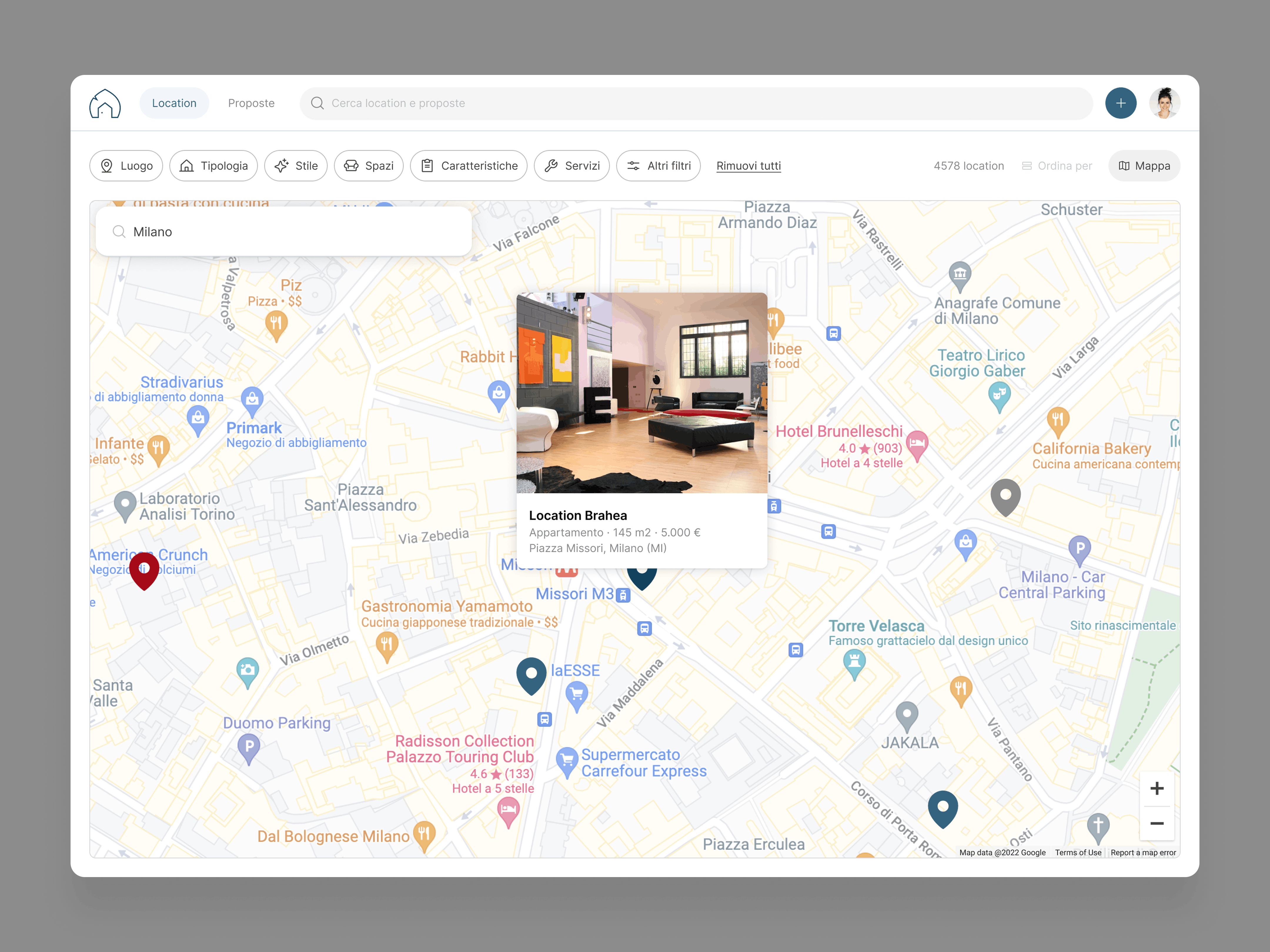
We started from the heart of the problem: location management and exploration. The system was designed to let staff navigate a large, complex archive quickly and intuitively, combining advanced filters, text search, map view and visual cards. The aim was to minimise the time needed to identify the most relevant locations and compare them.
Visual intelligence
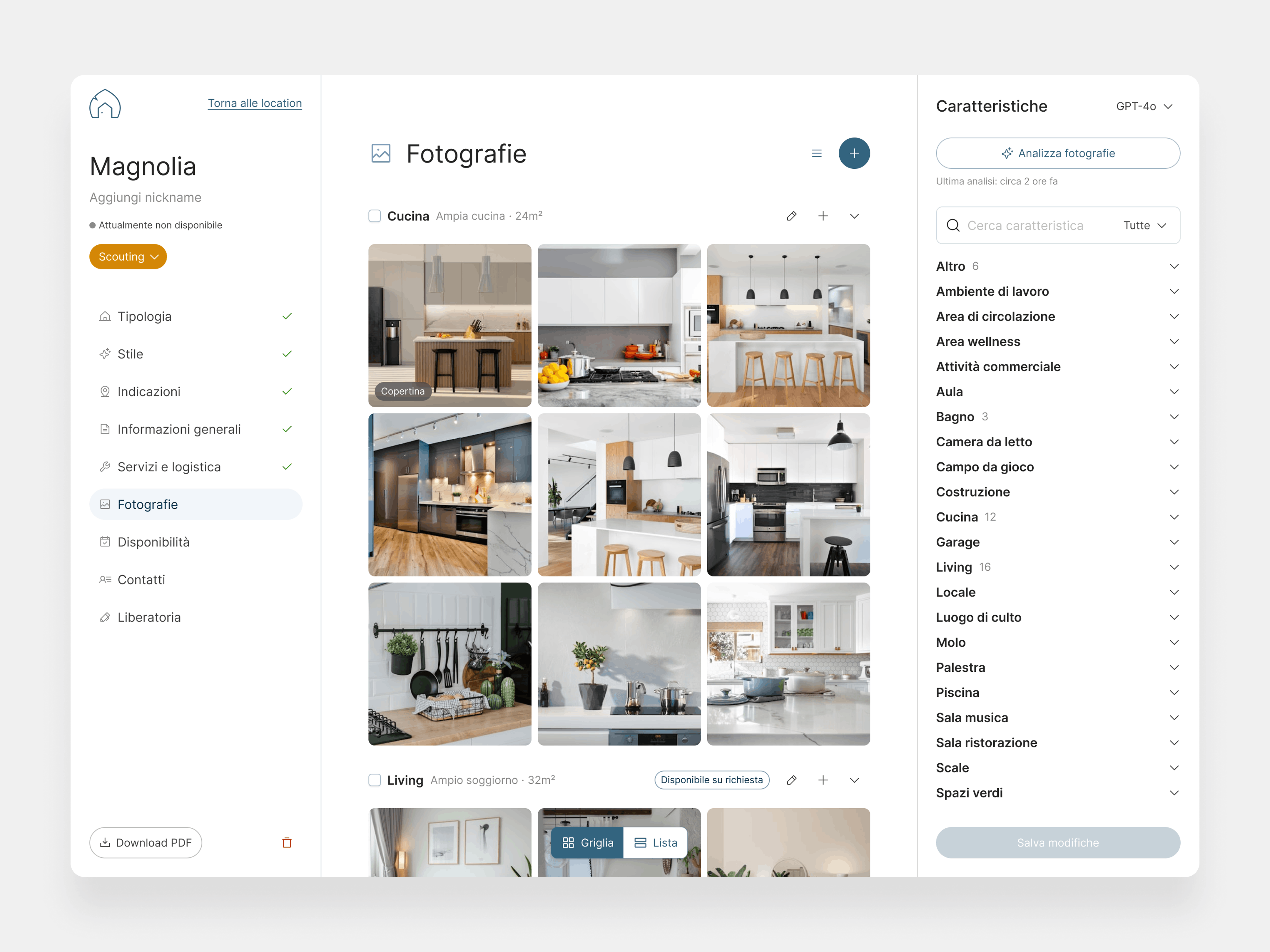
Once the operational base was in place, we introduced artificial intelligence support. Thousands of images are analysed to automatically suggest features useful for classifying locations, making a volume of data manageable that would have been unmanageable by hand. The AI does not replace human work but speeds it up, fitting into a flow that is always controlled by staff.
Commercial proposal management
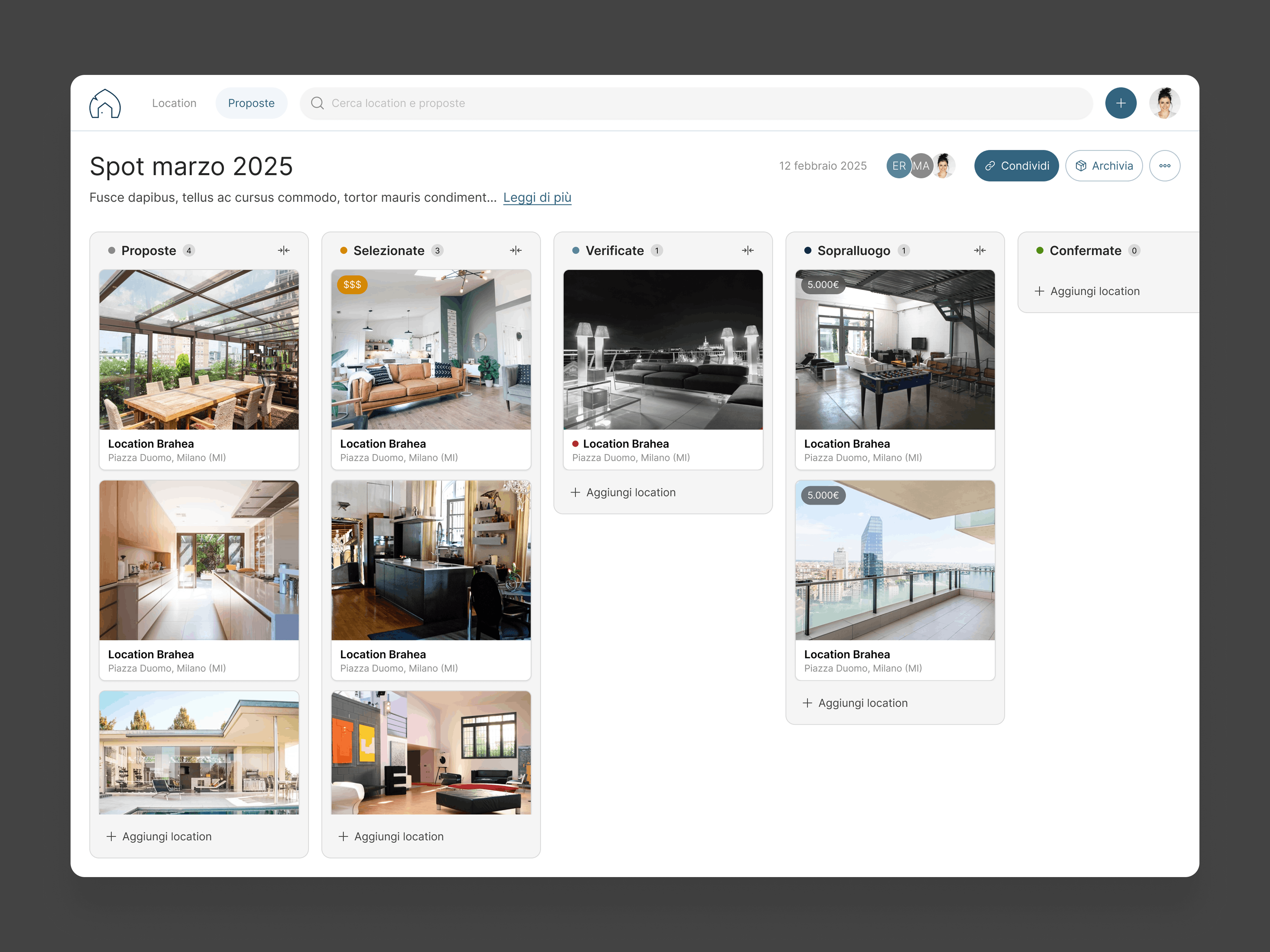
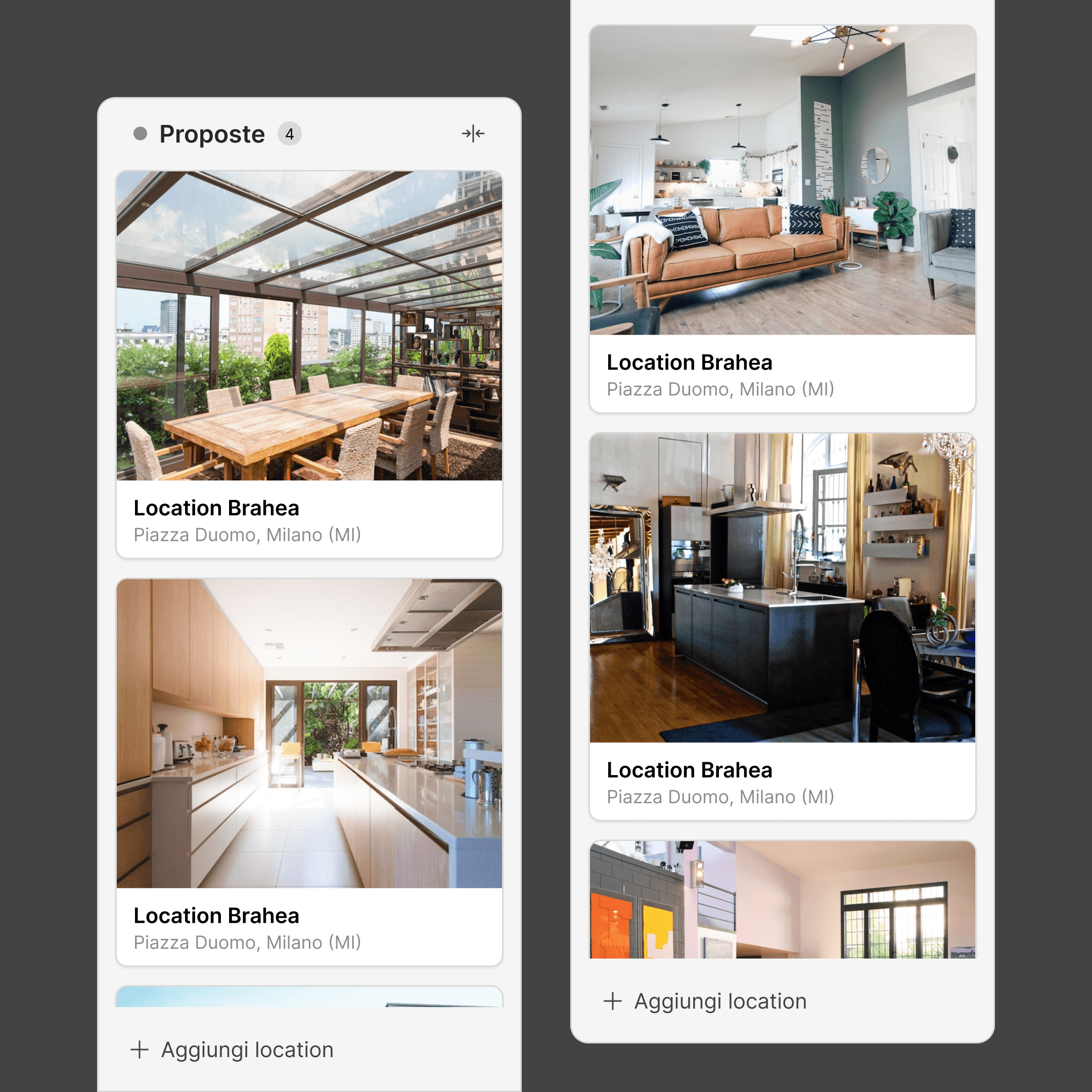
The next step was to turn scouting into a commercial tool. Proposals were designed as visual workflows that reflect the real phases of the location selection process. This lets the team work collaboratively while keeping a clear view of progress.
Reaching the end client
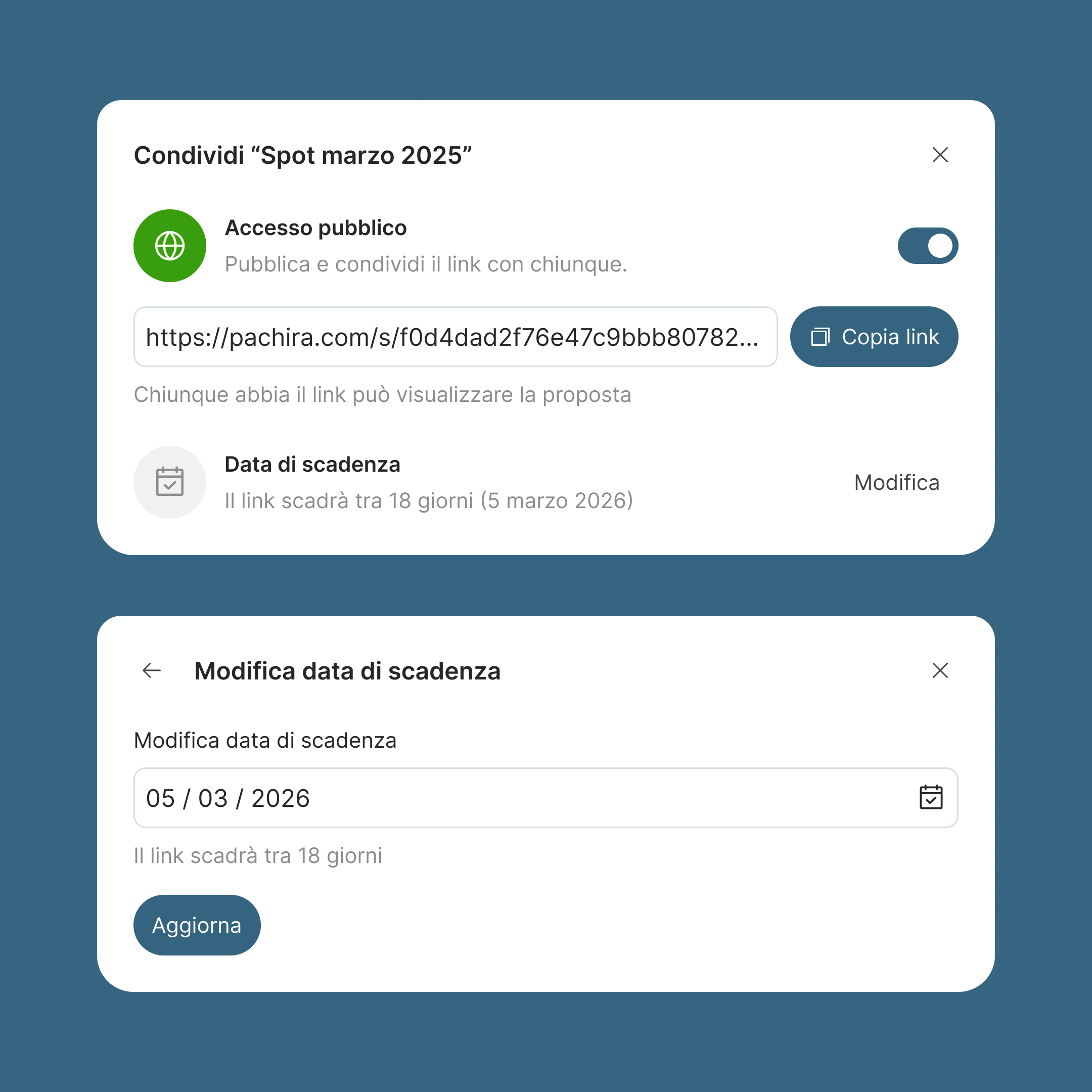
Finally, the system opens outward. Each proposal can be shared with the client via a dedicated link, offering a clear, step-by-step consultation experience. Information is shown according to the proposal status, allowing Pachira to present locations in a structured, controlled way without losing speed.
Concrete results
Over time, the project has delivered concrete results. The time needed to generate sheets and commercial material has gone from days to a few minutes, while the entire scouting process has become faster, more structured and controllable. But the value was not only in the end result.
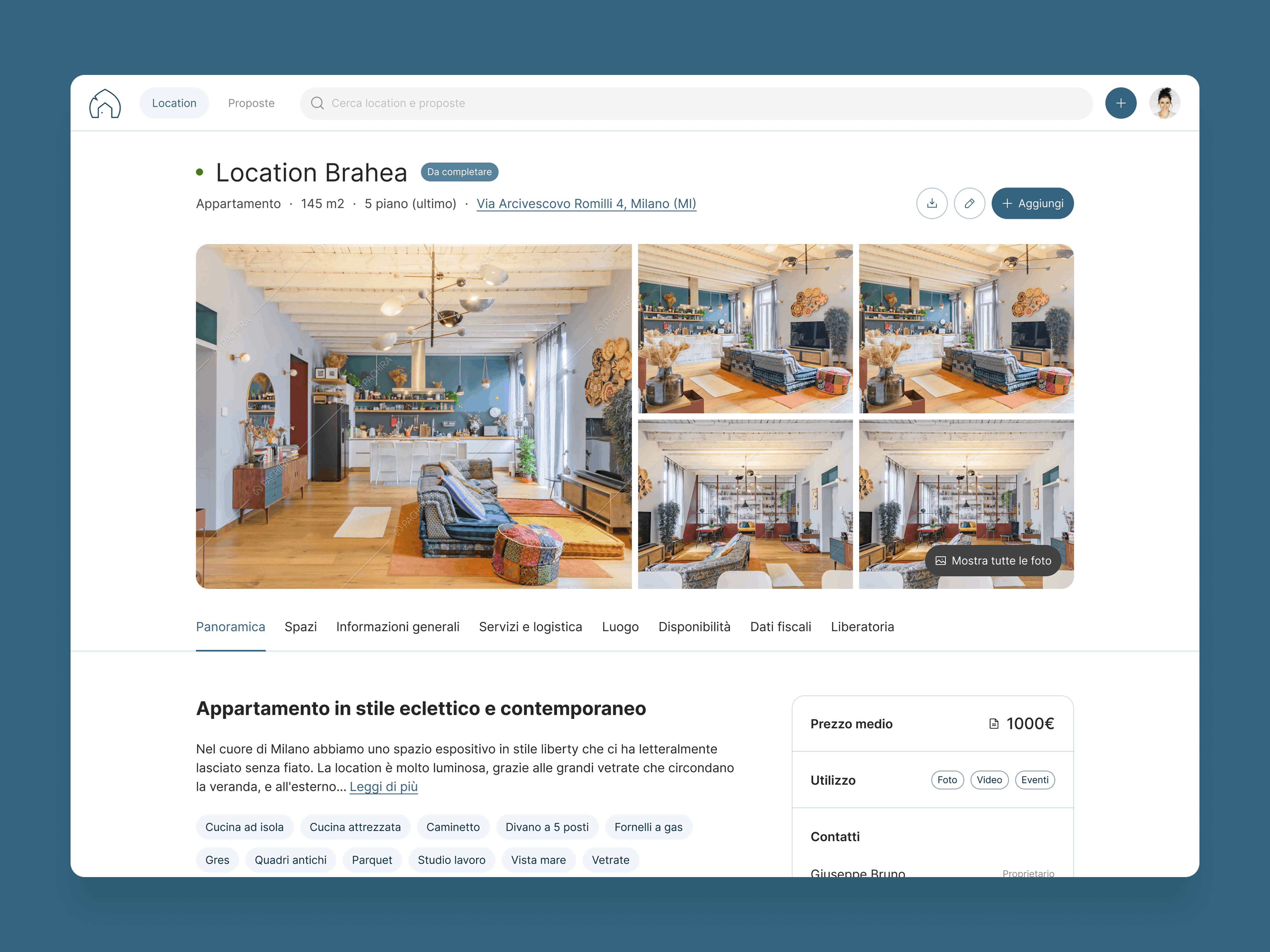
The software was built as a real digital product, evolving over the years through progressive releases. Each batch introduced new features, giving the Pachira team time to test them in day-to-day work, assess their effectiveness and steer subsequent evolution based on real business needs.
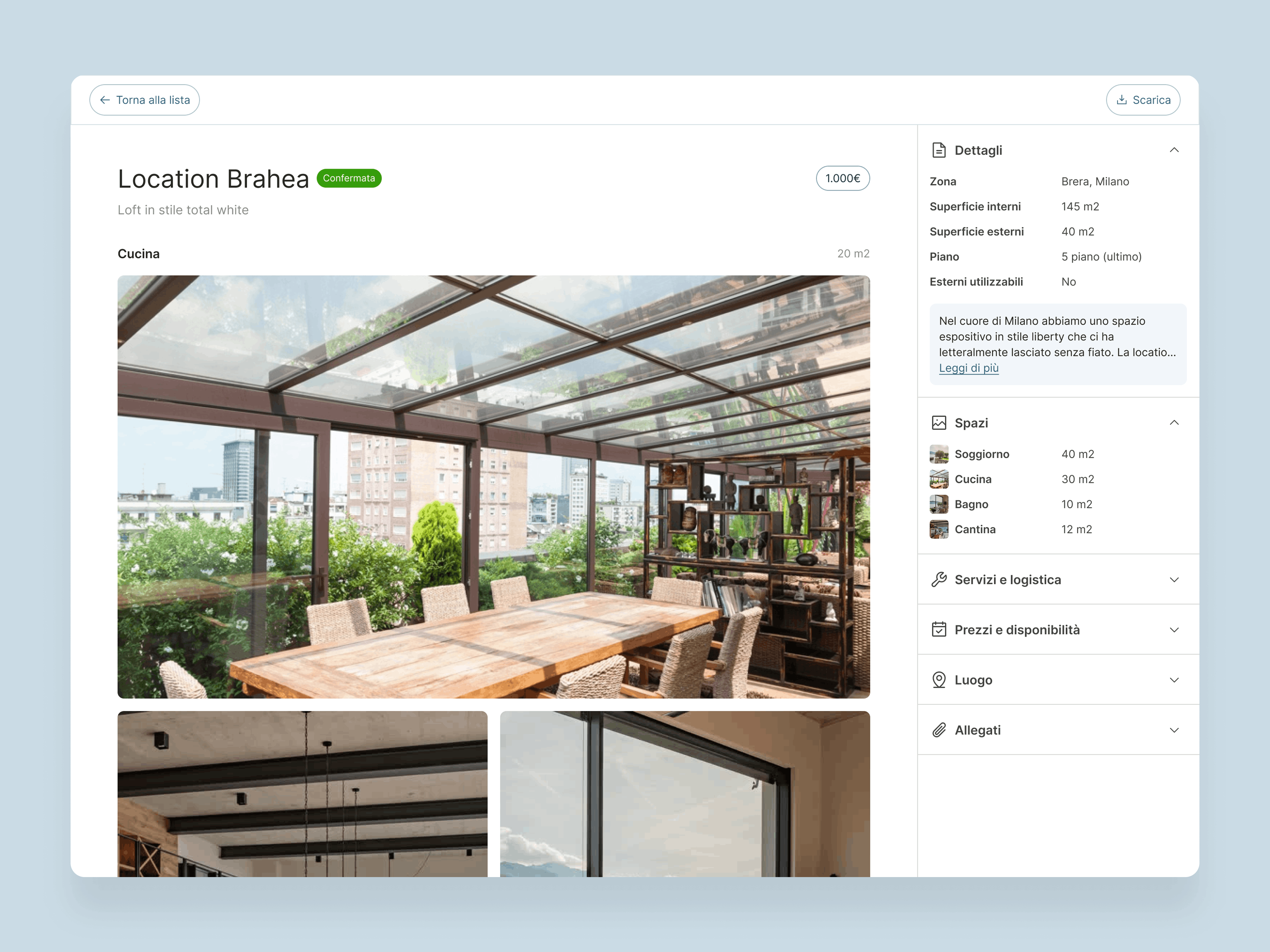
This approach allowed the system to grow organically, avoiding rigid or oversized solutions, and keeping product, processes and business goals aligned.
Moze and Pachira worked as one team. Moze contributed on both strategy and execution, handling experience design and technology development, and over time turning business needs into solid, usable, scalable software.
Jodie Amorese Founder, Pachira